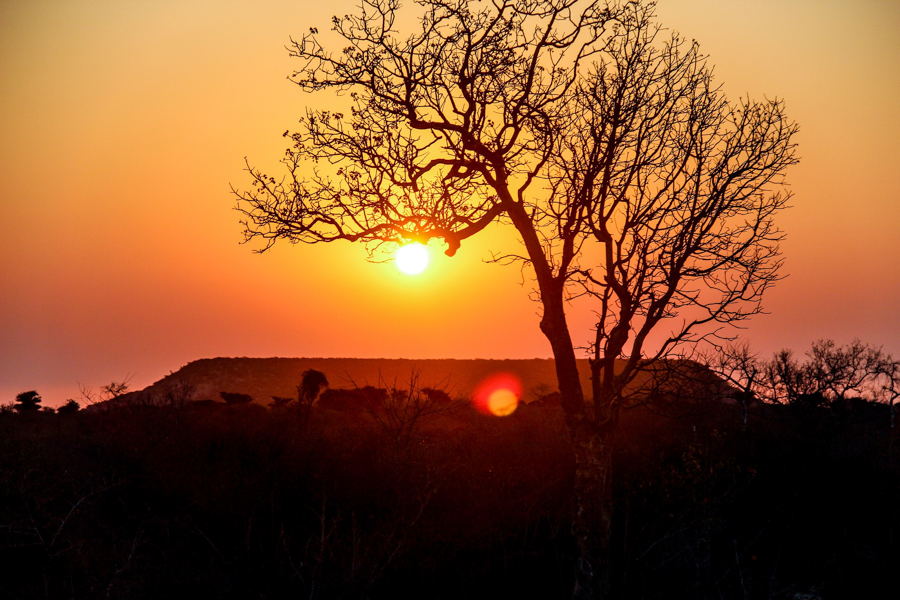
The Baobab is the national tree of Madagascar, and many travelers visit Africa specifically to see these majestic giants. With their massive presence and nurturing nature, they are truly wondrous. Let’s dive into some of the mysteries of the Baobab.
Where can you find Baobabs?
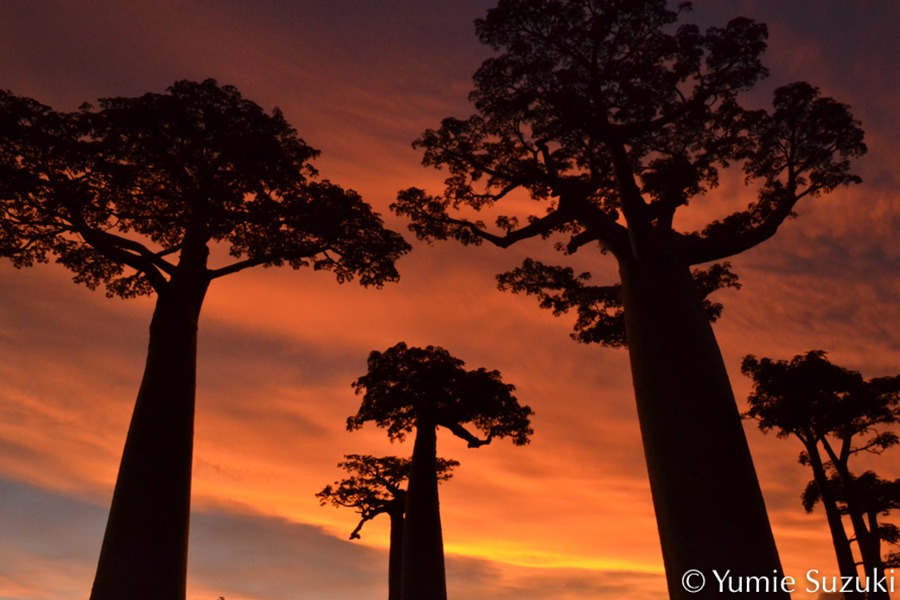
There are nine species of Baobabs in total: six are native to Madagascar, two to mainland Africa, and one to Australia. In Madagascar, Morondava and Ifaty are famous for their stunning Baobab groves.
How long do they live?
Because Baobabs lack traditional growth rings, it is difficult to determine their exact age, but many are known to live for thousands of years! Research suggests they can live up to 3,000 years. The tree goes by many names, including “Boab,” “Tabaldi,” “Bottle Tree,” “The Upside-Down Tree,” and “Monkey Bread Tree.” Due to the appearance of its fruit, it is even sometimes called the “Dead Rat Tree.”
Fleetingly Beautiful Flowers
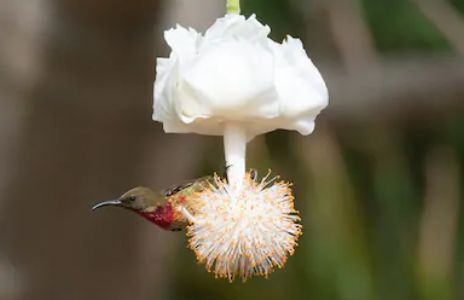
Baobabs are deciduous and lose their leaves during the dry season, remaining leafless for nine months of the year. In early summer, they produce large, heavy white flowers. These sweet-smelling blooms have numerous stamens and are pollinated by fruit bats. The flowers open in the late afternoon but fall within 24 hours, quickly turning from beautiful white to brown. They are truly fleeting and precious!
A Reservoir in the Trunk
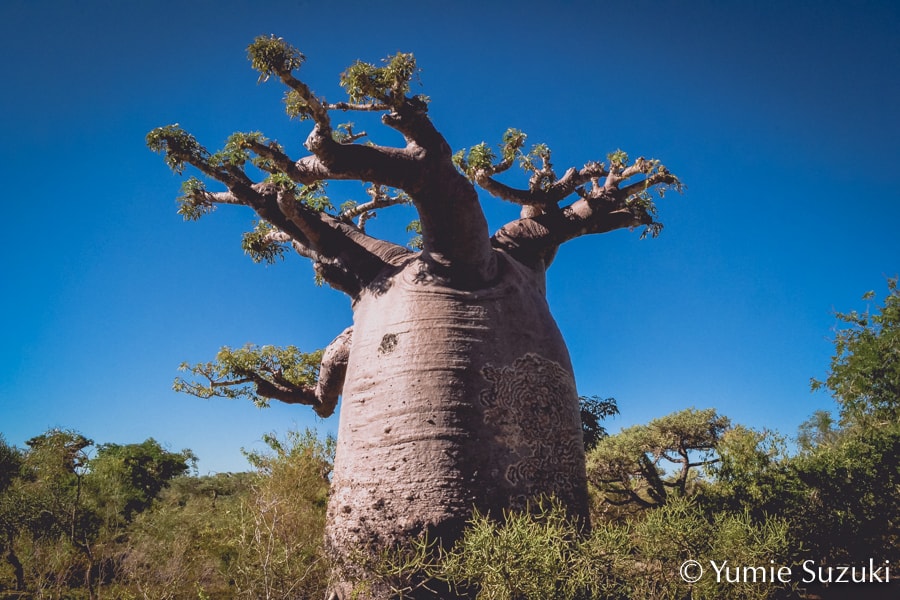
Baobab trees typically reach heights of 5 to 30 meters, with trunk diameters of 7 to 11 meters. The largest recorded circumference is a staggering 47 meters! To survive harsh droughts, the trunk can store up to 120,000 liters of water. This is why animals like elephants and elands chew on the bark during the dry season—to stay hydrated. Interestingly, the Baobab’s greatest enemies are drought, flooding, lightning, black mold, and elephants.
How are Baobabs used?
For local people, the Baobab is an incredible resource. Every part—fruit, seeds, leaves, and wood—is used for food, medicine, beauty products, juice, beer, and more. Used also for shelter and rituals, the tree is like a guardian deity to those who live alongside it.
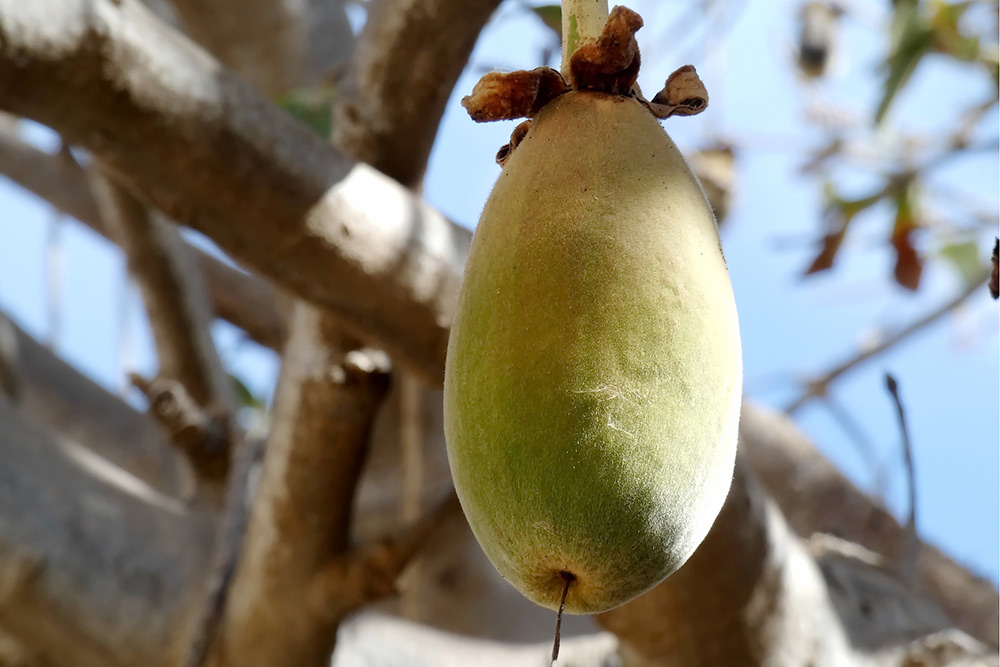
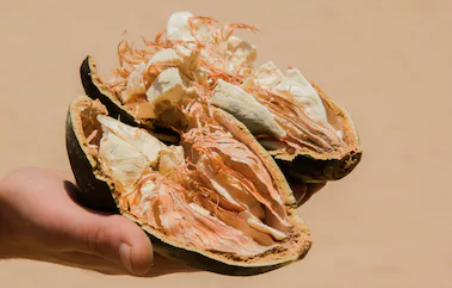
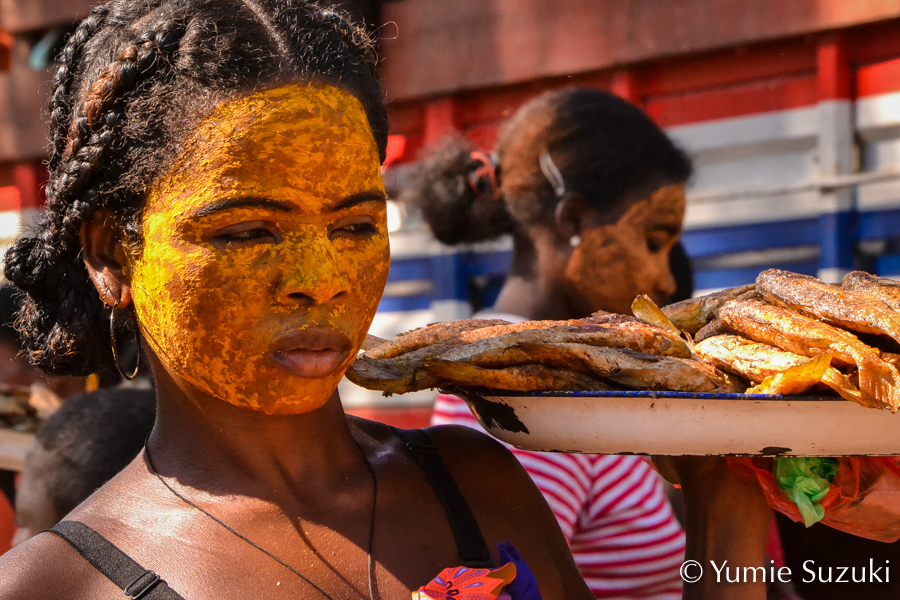
- Fruit: The dried pulp is mixed with milk or water to make a drink. It is a “superfruit” packed with antioxidants, calcium, and three times the Vitamin C of an orange! Local women even apply a bright yellow paste made from the fruit to their faces as sun protection.
- Seeds: Used to produce cooking oil. Animals like baboons and warthogs also love eating the seed pods.
- Leaves: Often consumed as a vegetable.
- The Tree: The hollowed-out trunks of large trees serve as sheds, storage units, and even post offices or local pubs! The wood is soft and resistant to mold, making it excellent for preservation.
These trees are also bustling ecosystems. Weaver birds build nests on the branches, owls hunt nearby, and reptiles, insects, and bats hide in the crevices. A single tree is a stage for constant natural drama.
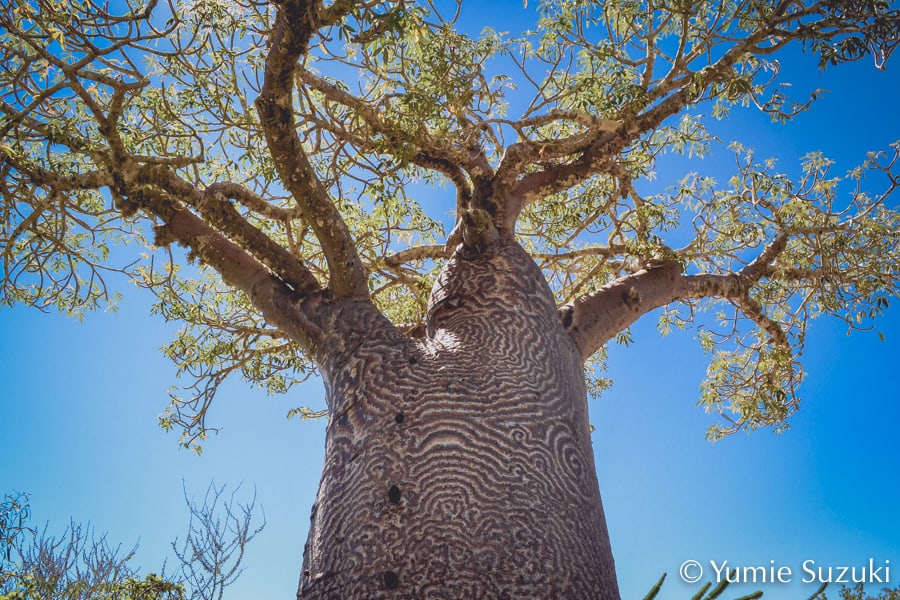
The Baobab is a mystical tree full of vitality and divinity, yet it offers so many practical benefits. Visiting these remote groves to witness this overwhelming sight is a once-in-a-lifetime experience. Why not visit Africa to see them for yourself?